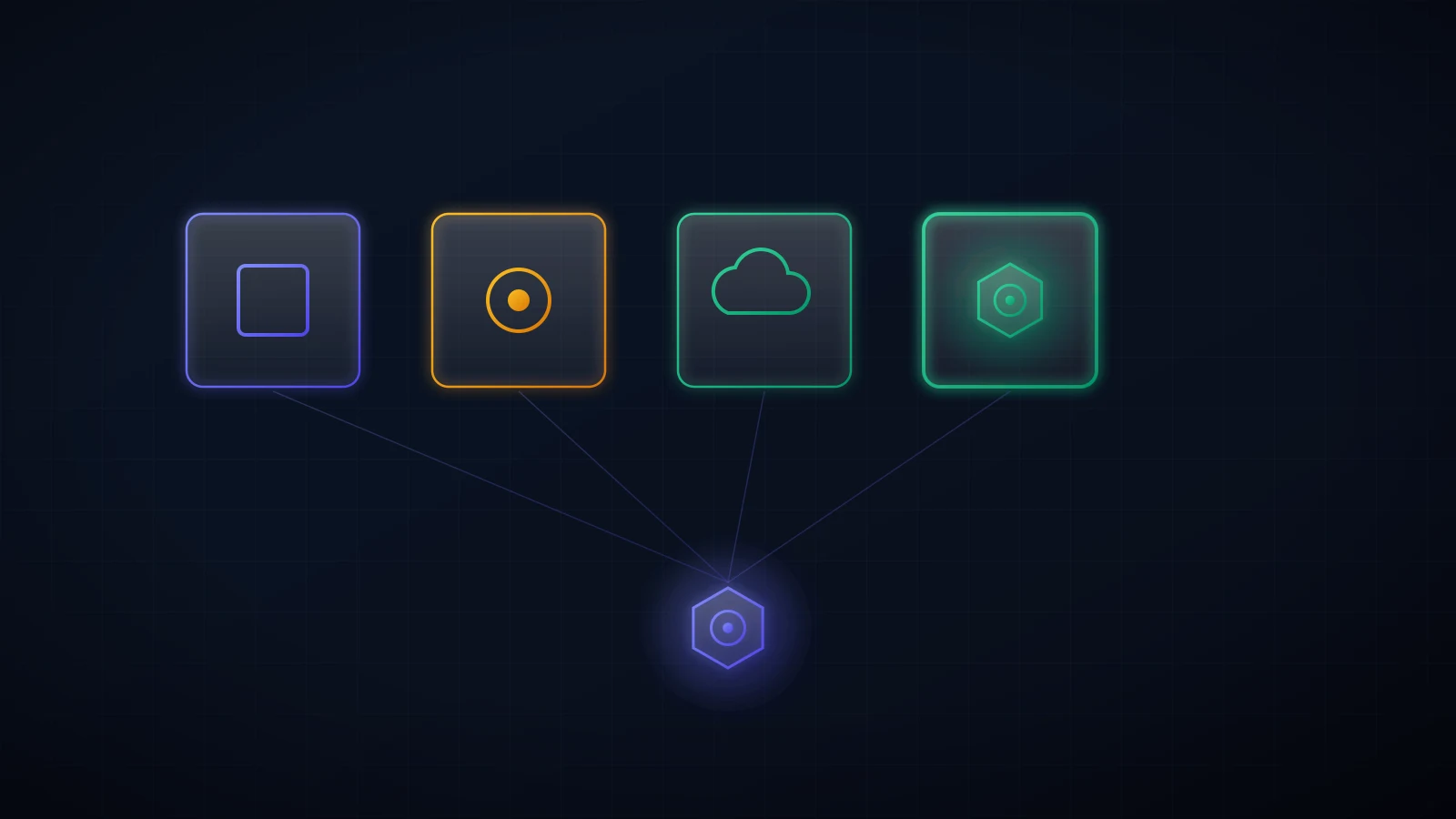
Search "best AI trading bot" and you'll drown in ranked lists promising 300% returns and five-star scores that were clearly written by the vendor's own affiliate team. This is not that. There's no leaderboard here, because an honest roundup can't rank a closed-box grid bot against an open agent you fully control on a single number — they're different tools for different people. What actually helps is a map: the AI trading market in 2026 splits into four categories, each with a real trade-off between control, transparency, hosting burden, and how many venues it can reach. This guide walks all four honestly (including where our own product, OpenClaw Direct, fits and where it doesn't) so you can match the tool to how you actually want to trade.
Why There's No Single "Best" AI Trading Bot
Ranked "best of" lists in this niche are mostly fiction. The performance numbers are unverifiable, the star ratings often trace back to affiliate payouts, and the whole premise — that one bot wins for everyone — falls apart the moment you ask what a person actually wants. Someone who wants to press one button and walk away needs the opposite of someone who wants to read every line of a strategy before it trades a dollar. Ranking those two on a single scale is category error dressed up as advice.
So this roundup organizes by approach, not by a leaderboard. Four categories cover essentially every AI trading tool worth considering in 2026. Each one makes a different bet on four trade-offs that matter more than any headline return: how much control you have over the logic, how much transparency you get into what it's doing, how much hosting and maintenance burden lands on you, and how many venues a single setup can reach. Get those four right for your situation and you've found your bot. Chase a screenshot of someone's backtest and you've found a way to lose money.
Category 1: Closed-Box Retail Bots (Easy, but Opaque)
This is the category most people mean when they say "trading bot." Platforms like 3Commas, Cryptohopper, and Pionex-style grid bots give you a dashboard, a menu of pre-built strategies — grid, DCA, arbitrage — and a few knobs to tune. You connect an exchange API key, pick a template, set your range, and it runs. For someone who wants automation without writing a line of code, nothing gets you live faster.
The convenience is real, and so is the cost of it. These bots are closed boxes: you rarely see the exact logic firing your orders, you're limited to the strategy types the vendor ships, and "AI" in the marketing often means a preset parameter tuner rather than anything that reasons about the market. A grid bot is a rule-follower, not a thinker — it does exactly one thing and does it whether or not the regime still suits it. You also hand an exchange API key to a third-party service, which widens your trust surface beyond the exchange itself.
Best for: beginners who want a specific, well-understood mechanical strategy (a grid in a ranging market, DCA into a position) and value a polished dashboard over open logic. Watch out for: opaque strategy internals, subscription tiers that gate the useful features, and marketing that oversells "AI" that is really parameter presets.
Category 2: Open-Source DIY Frameworks (Total Control, All the Work)
On the far other end sits the open-source camp, and Freqtrade is its flagship. It's a free, self-hosted crypto trading framework where you write your strategy in Python, backtest it against historical data, and run it live against your exchange. Everything is inspectable because everything is yours — the strategy code, the risk logic, the deployment. Nothing is hidden because there's no vendor to hide anything.
That transparency is the whole appeal, and the maintenance is the whole catch. You host it. You keep it running. You patch it, monitor it, and debug it at 3am when an exchange API changes and your bot silently stops filling. There's no support desk. The "AI" is whatever you build in — Freqtrade gives you machine-learning hooks, but you supply the intelligence and the judgment. It rewards people who genuinely want to engineer a system and punishes people who wanted a shortcut.
Best for: developers and quant-minded traders who want to own every layer, read every line, and don't mind being their own ops team. Watch out for: the maintenance treadmill, the temptation to trust a backtest that never survives contact with a live market, and the reality that "full control" also means full responsibility when something breaks.
Category 3: Broker-Native Agentic Surfaces (Powerful, but Per-Venue)
A newer category arrived as the exchanges themselves shipped agent-friendly surfaces. Robinhood's agentic layer, Coinbase's Base MCP, and API-driven access from Kraken and Binance let an AI agent read markets and place orders directly through the venue's own rails — no third-party bot service sitting in the middle. Because you're talking to the exchange natively, the integration is often tighter and the trust surface is narrower: it's you and the venue, with an MCP server as the translator.
The limitation is in the name. Each of these is native to one venue. A Coinbase Base setup trades on Base; it doesn't know Robinhood exists. If you want an agent that watches crypto on one exchange, equities on a broker, and perps somewhere else, the broker-native path means wiring up and babysitting several separate integrations, each with its own auth, its own quirks, and its own place to check when something's off. It's powerful within its walls and silent about everything outside them.
Best for: traders committed to a single venue who want the tightest possible integration and the smallest trust surface. Watch out for: lock-in to one exchange, and the multiplying complexity if you later decide you want more than one. We've written setup walkthroughs for the two most popular: Robinhood agentic crypto trading and trading on Coinbase Base via MCP.
Category 4: Open AI Agents on Managed Runtimes (Chat-Driven, Multi-Venue)
The fourth category is where the last two years of AI actually changed the shape of the tool. Instead of a fixed-strategy bot or a single-venue integration, you run an open AI agent — one you instruct in plain language, that reasons about the market, and that reaches multiple venues through MCP servers you wire in. OpenClaw Direct is one option here; Senpi, focused specifically on Hyperliquid, is another. The defining traits are that it's conversational, it's multi-venue, and you bring and own your own API keys.
Here's the honest part, since this is our category. An open agent is not turnkey. You assemble the MCPs for the venues you care about, you write the skills that encode your rules, and you own the keys and the responsibility that comes with them. In exchange you get something the other three categories can't offer together: one agent that can watch crypto on Hyperliquid, crypto on Coinbase Base, and equities through a broker, all instructed by chat, all logged in one audit trail, with the actual reasoning visible instead of hidden behind a preset. It trades convenience for control and transparency — the exact opposite bet from Category 1.
Best for: people who want a single, transparent, multi-venue agent they instruct in natural language and are willing to do assembly to get it. Watch out for: the setup effort, and the same hard truth that applies to every tool on this page — an agent that can reason is still not an agent that can predict, and it will lose money if you let it trade without guardrails.
How the Four Categories Compare
Put the four side by side and the trade-offs line up cleanly. No category wins every column, which is the whole point — you're choosing which trade-offs you can live with, not finding a tool with no downside.
| Closed-box retail bot | Open-source framework | Broker-native agentic | Open agent, managed runtime | |
|---|---|---|---|---|
| Examples | 3Commas, Cryptohopper, Pionex | Freqtrade | Robinhood Agentic, Coinbase Base MCP, Kraken, Binance | OpenClaw Direct, Senpi |
| Control over logic | Low — vendor presets | Total — you write it | Medium — your prompts, venue's rails | High — your skills and instructions |
| Transparency | Opaque closed box | Fully inspectable | Venue-dependent | Reasoning and actions visible |
| Hosting burden | None — vendor hosts | All on you — self-host | Low to medium — you run the agent | Managed runtime hosts it |
| Venue reach | Its supported exchanges | Whatever you integrate | One venue per setup | Multi-venue via MCPs |
| API-key ownership | Handed to the service | You hold it | You and the venue | Bring your own; encrypted vault |
| Ease of start | Fastest | Hardest | Moderate | Moderate — some assembly |
How to Actually Choose (An Honest Buyer's Guide)
Forget scores. Choosing well is a matter of answering four questions honestly about yourself, then picking the category that fits your answers. This is the part the ranked lists skip, because it doesn't sell affiliate clicks.
- Control vs convenience. Do you want to press one button and walk away, or read and shape the logic before it trades? One button points to a closed-box bot. Shaping the logic points to a framework or an open agent.
- Transparency. Do you need to see exactly why a trade fired? If yes, rule out the opaque closed boxes — you want open-source or an agent whose reasoning you can inspect.
- Hosting burden. Are you willing to be your own ops team, patching and monitoring at odd hours? If not, avoid self-hosting Freqtrade and lean toward a managed option, closed-box or managed-runtime.
- Venue count. One venue or several? A single exchange makes broker-native the tightest fit. Several venues under one agent is exactly what the managed-runtime category exists for.
Notice that the answers pull in different directions, which is why there's no universal winner. Someone who wants maximum convenience and one venue lands in a completely different place from someone who wants transparency and five venues — and both are choosing correctly for themselves. The mistake isn't picking the "wrong" category; it's picking without knowing which trade-offs you were making.
The Warning That Applies to Every Category
One thing is true across all four, and no vendor on any of these lists will lead with it: an AI trading tool is not a money printer, and the impressive backtest is not evidence. The quant community's standing complaint is that there are thousands of posts bragging about simulated returns for every one that shows live, audited profit and loss. A strategy that dazzles on historical data routinely falls apart on a live, adversarial market — and that's just as true of a large language model reasoning about trades as it is of a hand-coded strategy.
So whichever category you choose, the same discipline applies. Start read-only or in simulation. Keep your first live allocation to a small fraction of what you're tempted to commit. Cap leverage and position size in a rule the tool can't override. Keep a human in the loop on real orders. And judge any tool on its live results over weeks, never on a screenshot. For the fuller reckoning of where these systems genuinely fall short with money on the line, we wrote what AI still can't do in markets, and the concrete guardrail patterns live in our safety rails for trading agents guide.
Where OpenClaw Direct Fits — and Where It Doesn't
In the interest of the honesty this whole piece promised: OpenClaw Direct is our product, and it sits squarely in Category 4. It's a managed runtime for an open AI agent — you get a dedicated, isolated Instance, you bring your own API keys and store them in an encrypted vault, and you reach multiple venues (Hyperliquid, Coinbase Base, Robinhood, and more) through MCP servers you wire in. It's chat-driven through Telegram and other channels, it keeps a full audit trail of every action, it holds 99.9% uptime so the agent stays online when your laptop doesn't, and there's a browser kill switch reachable from any device.
It is not the right tool for everyone, and pretending otherwise would undercut the point of an honest roundup. If you want turnkey with zero assembly, a closed-box bot will get you live faster. If you want to own and self-host every layer, Freqtrade gives you that. If you're devoted to exactly one venue forever, a broker-native integration is tighter. OpenClaw Direct earns its place only if you specifically want an open, transparent, multi-venue agent you control, and you accept that you'll assemble the MCPs and write the skills to get there. If that's you, the Advanced plan is $29/month with free trial credits — enough to wire up a venue and watch your first few reads and orders fire before you commit.
Want an open, multi-venue agent you actually control?
Run one on OpenClaw Direct. Bring your own keys, reach multiple venues, keep a full audit trail. Free trial credits with every subscription.
Run OpenClaw NowSources: Freqtrade — Open-source crypto trading bot documentation, Coinbase Developer Platform — Base MCP docs, Model Context Protocol — official specification, and r/algotrading — community discussion on backtests vs live PnL.