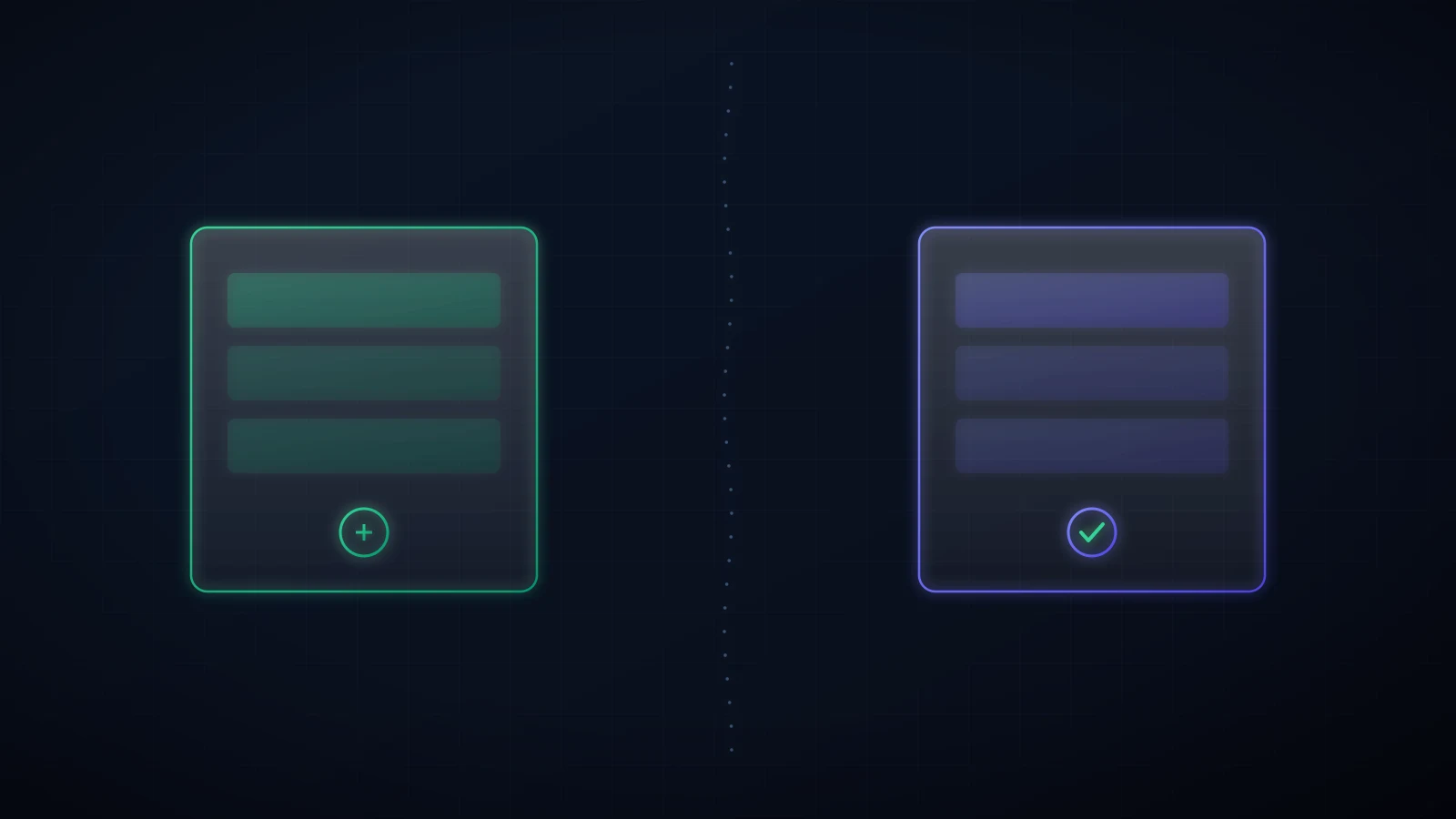
Polymarket vs Kalshi is the first real decision anyone building a prediction-market agent has to make, and it's the one most people get backwards. They compare the odds first and the rules last. That's the wrong order. Both venues let you trade the same shape of thing — yes/no contracts that settle to a single outcome — but they sit on opposite sides of a legal line. Kalshi is a US, CFTC-regulated exchange built for US persons. Polymarket now runs two separate venues — its crypto-native international exchange, which is not available to US persons, and a newer CFTC-regulated US platform, Polymarket US, which is — so which Polymarket you mean changes the eligibility answer entirely. Before your OpenClaw agent ever reads a single market, eligibility — not the spread — should decide where it trades. This guide walks the differences that actually matter, then shows where an agent fits on each.
What Do Kalshi and Polymarket Actually Have in Common?
At the contract level, more than you'd think. Both are prediction markets: you buy a share in a yes/no outcome — "will this happen by this date?" — and each share pays out a fixed amount if you're right and nothing if you're wrong. Prices sit between zero and one (or zero and 100 cents), and you can read that price as the market's implied probability. If a contract trades at 62 cents, the crowd is pricing the event at roughly 62%. Sell before resolution and you realize the move; hold to the end and you settle at the full amount or zero.
That shared shape is why people lump the two together, and why an agent can, in principle, watch both with the same mental model. It's also why a cross-venue arbitrage strategy is even conceivable — the same real-world question sometimes trades at different prices on each platform. But the similarity ends at the contract. Everything underneath — who regulates it, who can trade it, what settles the bet, how you fund it — is different enough that treating them as interchangeable is the mistake this whole post exists to prevent.
How Are Kalshi and Polymarket Regulated?
This is the difference that should drive your decision, so start here. Kalshi is a CFTC-regulated derivatives exchange — a designated contract market operating under US federal commodities oversight. Its event contracts are legal financial instruments for US persons, cleared and settled inside a supervised US venue. When people ask "is this legal in the US?", Kalshi is the answer that's built to be yes.
Polymarket sits in a more complicated position. Its original platform is a crypto-native prediction market where contracts live onchain and settle in stablecoins, and that international exchange is not available to US persons — a non-custodial platform where you trade from your own wallet. But after acquiring the CFTC-licensed exchange and clearinghouse QCEX in 2025, Polymarket now also operates Polymarket US (the QCX designated contract market), a CFTC-regulated venue that launched to US traders in late 2025 with KYC and fully collateralized contracts. So Polymarket is really two things at once: an offshore crypto exchange US persons can't use, and an onshore regulated one they can. The practical upshot is simple: your residency and eligibility — and which Polymarket you actually mean — not the user interface, decide what you're allowed to use.
For an agent builder, that regulatory split has a concrete consequence. A CFTC-regulated venue gives you a supervised counterparty, defined contract rules, and dollar settlement. A crypto-native venue gives you self-custody, onchain transparency, and stablecoin settlement — with the responsibilities that come with holding your own keys. Neither is "safer" in the abstract. They're safe in different ways, for different people, in different places.
Kalshi vs Polymarket: The Side-by-Side
Here's the comparison that matters, on the characteristics that are well documented rather than any invented figures. Where an exact number would change month to month — fees, liquidity depth, market counts — this describes the shape rather than pretending to a precision it can't have.
| Kalshi | Polymarket | |
|---|---|---|
| Regulation / legal status | US CFTC-regulated exchange (designated contract market) | International exchange: crypto-native, non-custodial, not a US-regulated venue. Polymarket US (QCX): CFTC-regulated designated contract market |
| US availability | Yes — built for US persons | Split — international platform closed to US persons; CFTC-regulated Polymarket US open to them |
| Market types | Event contracts: economics, weather, politics, culture and more | Prediction markets across politics, crypto, sports, current events and more |
| How markets resolve | Per exchange contract rules within the regulated venue | Decentralized oracle (UMA optimistic oracle) onchain |
| Funding & settlement | US dollars, via bank/card; dollar-denominated contracts | International: stablecoins (USDC) from your own crypto wallet, onchain. Polymarket US: USD, fully collateralized |
| Fees | Exchange trading fees apply; check current schedule | Onchain trading plus network/gas costs; check current terms |
| Liquidity | Deep on headline markets; thinner on niche contracts | Deep on major events; thinner on long-tail markets |
| Agent / API access | Official REST/WebSocket API with API keys | CLOB API plus onchain access; trades signed by your wallet |
Read the table top to bottom and the pattern is clear. The first two rows decide who's even in the room; the rest only matter once eligibility says you're allowed to trade. That ordering is the whole argument of this post compressed into a grid.
What Settles the Bet? Resolution Is the Hidden Risk
How a market resolves is the part beginners skip and experienced traders obsess over. On Kalshi, resolution happens according to the exchange's published contract rules inside a regulated venue — there's a defined source of truth and a supervised process for settling each contract. On Polymarket, resolution runs through a decentralized oracle, the UMA optimistic oracle, where proposed outcomes can be challenged and disputed onchain before they finalize.
Why does this matter for an agent? Because ambiguity lives in resolution. A market that looks like a coin flip on price can hinge entirely on the exact wording of what counts as "yes." An agent optimizing on price alone will happily buy into a contract whose resolution criteria are contested — and then discover that the interesting question wasn't the odds but the definition. Both venues have had markets where the real drama was how the outcome got adjudicated, not where it traded. Teach your agent to read the resolution terms, not just the order book. This is exactly the kind of judgment gap we cover in what AI still can't do in markets: a model can price a probability, but it can't reliably tell you when the question itself is the trap.
Where Does an OpenClaw Agent Fit on Each?
On both venues, an agent's real superpower is the same: watching. Prediction markets reprice constantly as news breaks, and headline events resolve on their own schedule, not yours. An always-on agent can scan markets around the clock, flag when a price moves against a thesis, summarize the state of a dozen contracts into one brief, and wait for your call before it acts. That read-heavy, act-rarely shape is where an OpenClaw agent earns its keep — and it's identical whether the underlying venue is Kalshi or Polymarket.
The wiring differs by venue, though, which is why we keep the setup guides separate. For the US-regulated path, our Kalshi setup guide walks the API-key flow, the read-only start, and the safety skill. For the crypto-native path, the Polymarket setup guide covers the wallet-based connection and its own guardrails. And if you're eligible for both and want the agent to compare prices for the same real-world question across venues, the cross-venue arbitrage guide shows how to watch both at once — with the loud caveat that eligibility, fees, and settlement mechanics often eat the gap the odds seem to promise.
One rule holds across all three. Let regulation and eligibility drive the venue choice, not the odds. It's tempting to point an agent at whichever platform is showing the juicier price on a given event. But if that platform isn't one you're eligible to use, a better price is worth exactly nothing — and chasing it is how a tidy automation turns into a compliance problem.
How Should You Start — Whichever Venue You Pick?
The same way on both: read-only, capped, and with a human in the loop. Don't hand a fresh agent a signing key and a funded account and hope for the best. Give it a bounded first task that moves nothing — read the open markets, pull current prices and resolution terms, and write a short brief on what it would trade and why. Run that loop until the briefs are consistently sane. Good briefs are evidence the plumbing works; nonsense briefs catch a problem before any money is at risk.
When you do go live, keep the guardrails from our trading-agent safety hub in place from the first order, not bolted on after a scare:
- A per-trade cap and a rolling daily limit, so a single bad read can't drain the account.
- A market whitelist — only the categories you actually want traded, nothing the agent found trending at 3am.
- A rule to read the resolution terms and current balance before every order, so it never buys into a contest it doesn't understand.
- A Telegram approval on every trade: a preview of market, side, size, and price, with confirm and reject buttons, before anything settles.
- These rules live in a persistent safety skill, not a chat instruction — chat instructions vanish when memory is compacted; skills survive every restart and model swap.
Notice that none of these depend on which venue you chose. The eligibility decision is venue-specific; the discipline is universal. That's the reassuring part: once you've picked the right platform for your jurisdiction, the safety playbook is the same one you'd run anywhere.
So Which Should Your Agent Trade?
If you're a US person, you now have two CFTC-regulated options rather than one: Kalshi, and Polymarket US — both built to be legal for you, though Polymarket US launched with KYC and a narrower slate of markets. What stays off-limits is Polymarket's international exchange, and there's no clever workaround worth the risk of trying to reach it. Once eligibility has narrowed the field to the venues you can actually use, the comparison opens up to the second-order stuff: which venue lists the markets you care about, where the liquidity sits for your typical size, how each resolves the contracts you'd actually trade, and which funding rail fits how you already hold money. Let those preferences break the tie after eligibility has already narrowed the field.
What shouldn't decide it is a screenshot of a better price. Odds are the last input, not the first. An agent that reasons "eligibility, then resolution, then liquidity, then price" is an agent you can trust to run unattended. An agent that reasons "best price wins" is one that will eventually route your money somewhere it shouldn't go. Build the first kind.
Ready to run a prediction-market agent the right way?
Host it on OpenClaw Direct — your own isolated Instance, BYO API key in an encrypted vault, 99.9% uptime, full audit trail, and Telegram approvals on every trade. Advanced is $29/month, and free trial credits come with every subscription.
Start Your Free TrialSources: Kalshi — CFTC-regulated event-contract exchange, U.S. Commodity Futures Trading Commission (CFTC), Polymarket — prediction market, Polymarket — QCEX (CFTC-licensed exchange) acquisition, UMA — Optimistic Oracle, and OpenClaw Direct's own Kalshi and Polymarket setup guides.